
“De Overslag Deventer — A New Place for Living and Making in the Harbour District.”
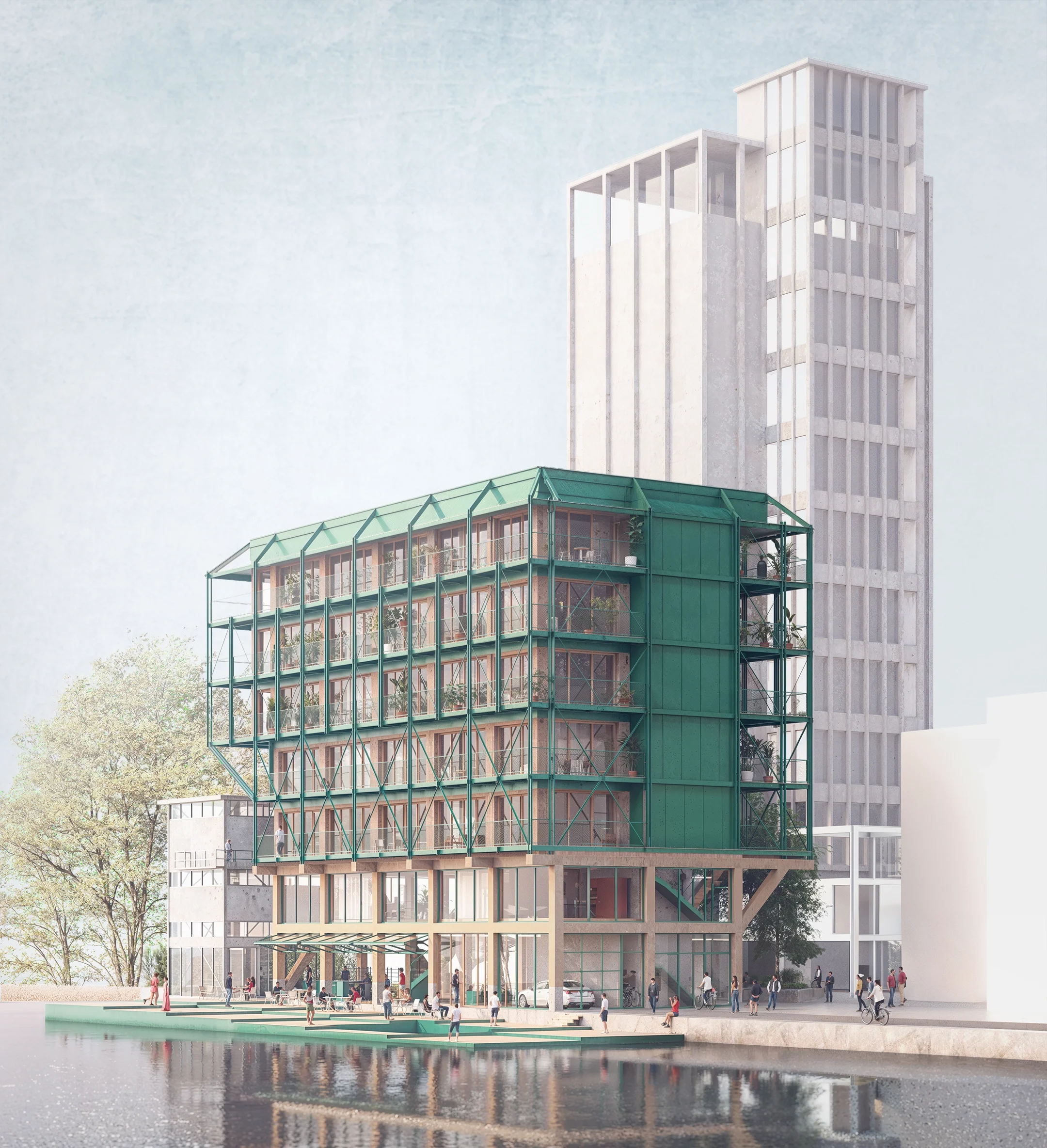
De Overslag is a mixed-use residential and working building located in the Havenkwartier of Deventer, a former industrial harbour area undergoing a transformation from a production-based economy to a knowledge-driven, innovative urban district.
The project built with RDVA Architects is conceived as an architectural and social catalyst at both building and neighbourhood scale, contributing to the broader transition of the city. The name De Overslag—literally meaning “transshipment”—is used as a metaphor for social, material and economic exchange, reflecting the project’s ambition to facilitate interaction between residents, makers and the city.
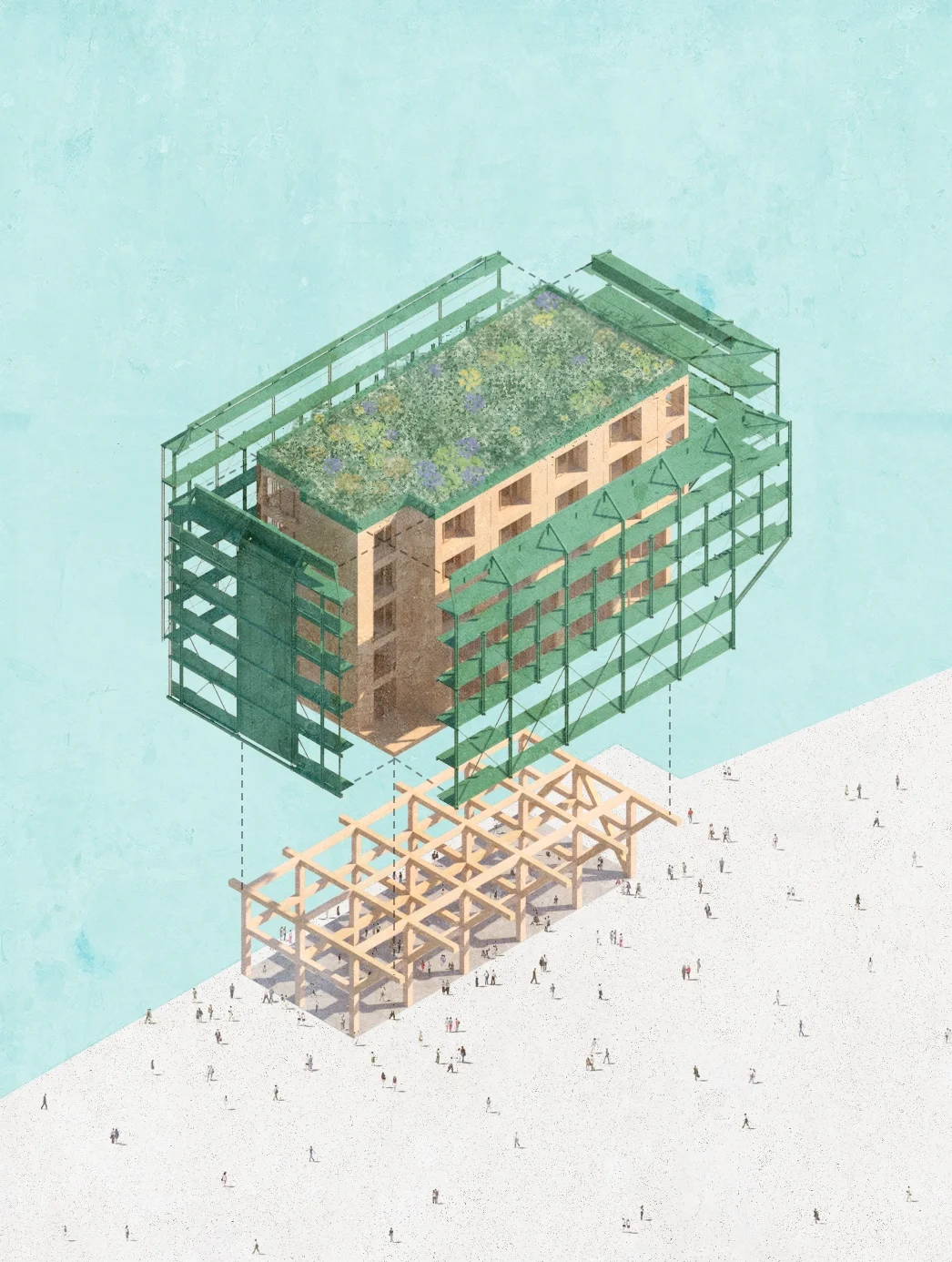
At its core, De Overslag combines a biobased residential structure with a lively, productive plinth, wrapped in an expressive circular steel shell, forming a distinctive and recognisable landmark within the Havenkwartier.
Key Ambitions
Build a sustainable and inclusive urban community where living, working and making coexist.
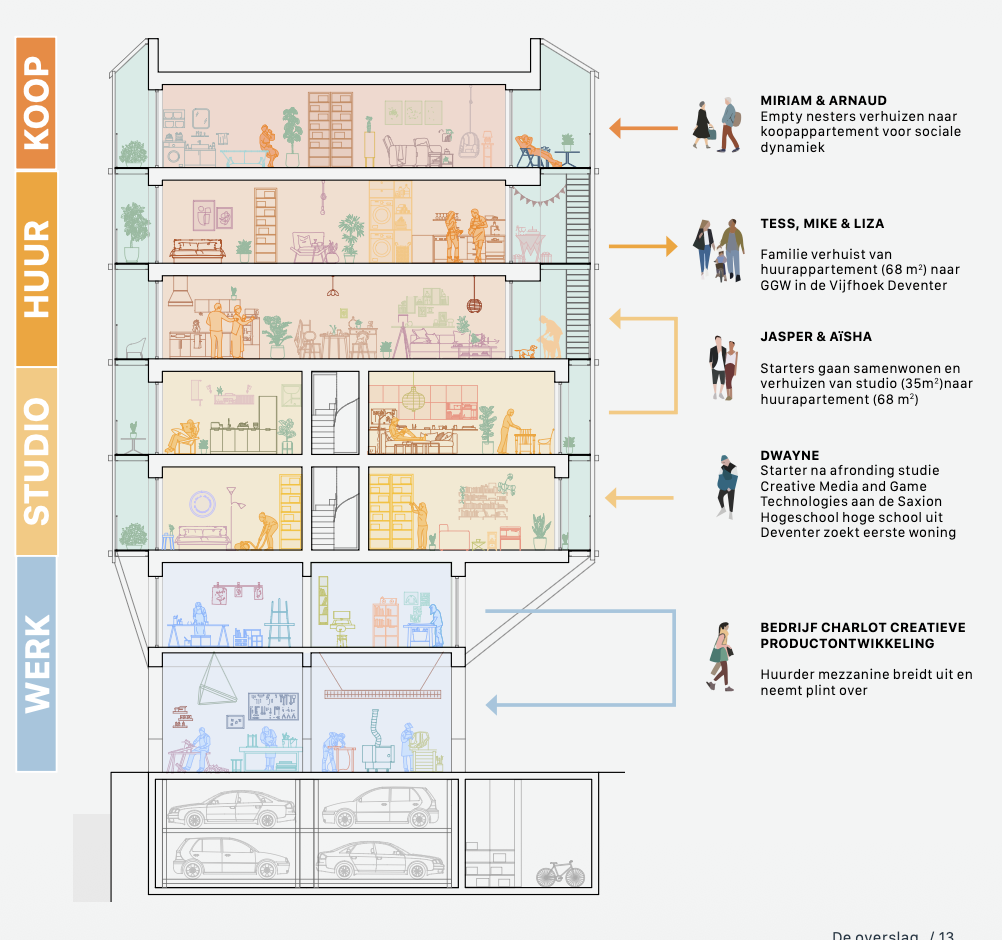
Introduce a new residential typology for Deventer, tailored to starters, young professionals and makers.
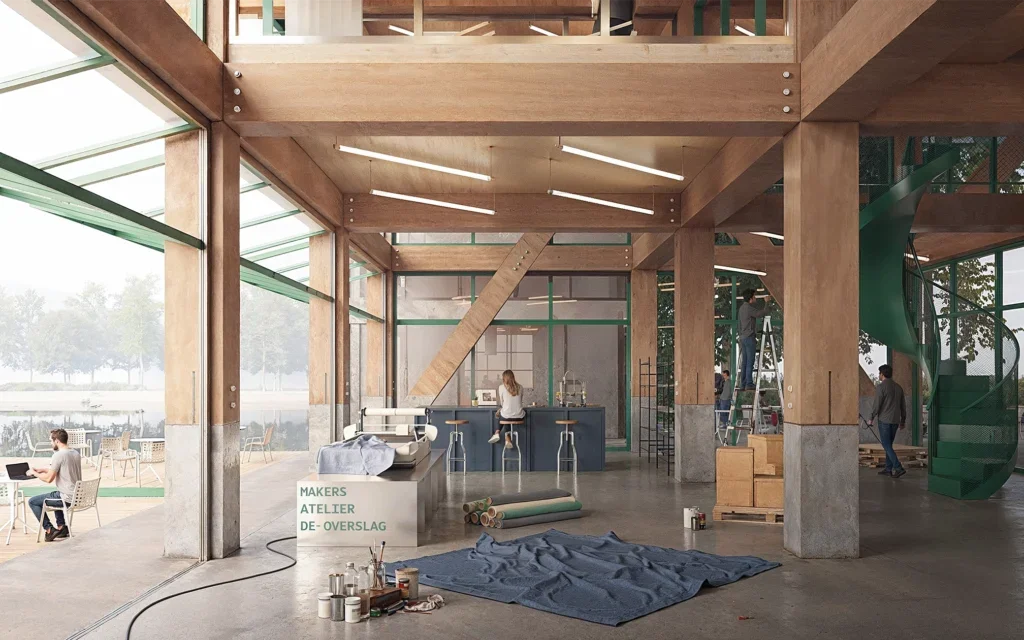
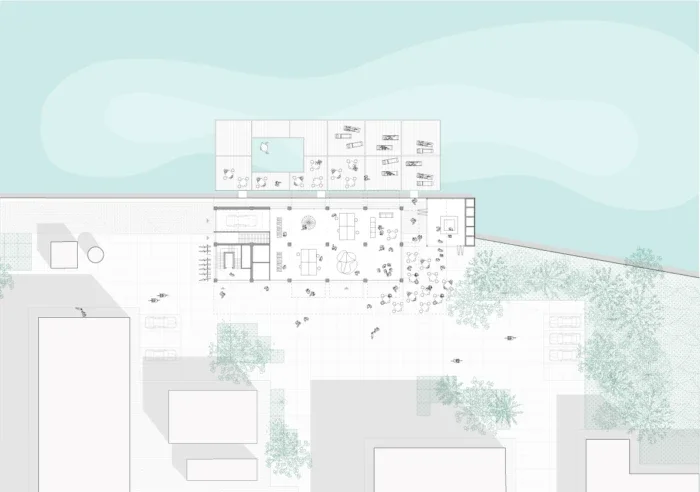
Activate the ground floor and waterfront, strengthening daily and weekend urban life in the Havenkwartier.
Demonstrate circular construction in practice, not as an abstract ambition but as a tangible, scalable model.
Create long-term social, environmental and economic value, positioning the project as an impact-driven investment.
Strategy & Approach
The development strategy of De Overslag is built on a combination of technical robustness, spatial flexibility and early stakeholder involvement. A proven CLT timber structure forms the stable backbone of the building, while innovation and experimentation are deliberately concentrated in the detachable circular steel shell.
A key element of the approach has been the early and active involvement of future users. Prospective residents, makers and local entrepreneurs were consulted at an early stage of the design process. Through interviews, working sessions and informal consultations, their needs, ambitions and daily practices informed both the spatial layout and the programmatic mix of the building. This co-creative process has led to well-founded design choices regarding housing typologies, shared facilities, workspaces, mobility concepts and the activation of the plinth.
Additional strategic principles include:
User-centred development: residential and workspace typologies are directly informed by the lifestyles and working patterns of the intended target groups, strengthening long-term usability and social cohesion.
Phased adaptability: the building is designed to evolve over time, allowing future functional changes without structural loss or demolition.
Local value chains: biobased and circular materials are sourced as much as possible within the Deventer–Apeldoorn–Zutphen region, reinforcing regional economic ecosystems.
Risk mitigation through programmatic mix: the combination of rental and owner-occupied housing, workspaces, shared facilities and public-oriented functions diversifies revenue streams and reduces long-term vacancy risk.
By integrating future residents and businesses into the development process from the outset, De Overslag moves beyond a traditional top-down model and establishes a shared sense of ownership, commitment and long-term resilience.
Design & Sustainability
Design
Architecturally, De Overslag is defined by the dialogue between two systems:
a robust, warm timber core, and
a light, expressive circular steel shell.
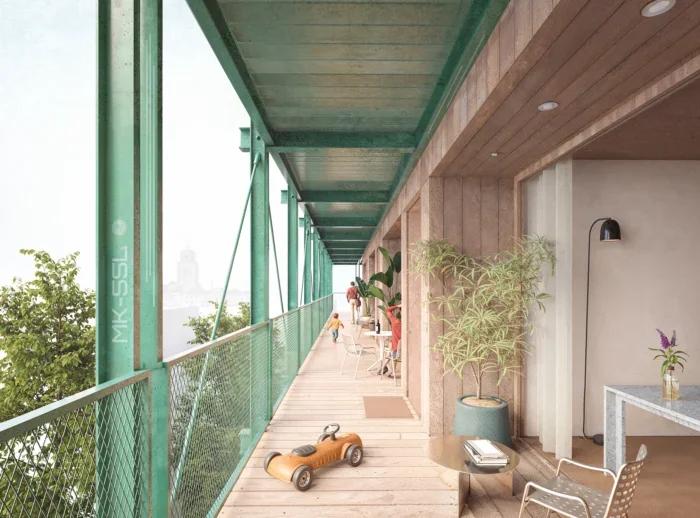
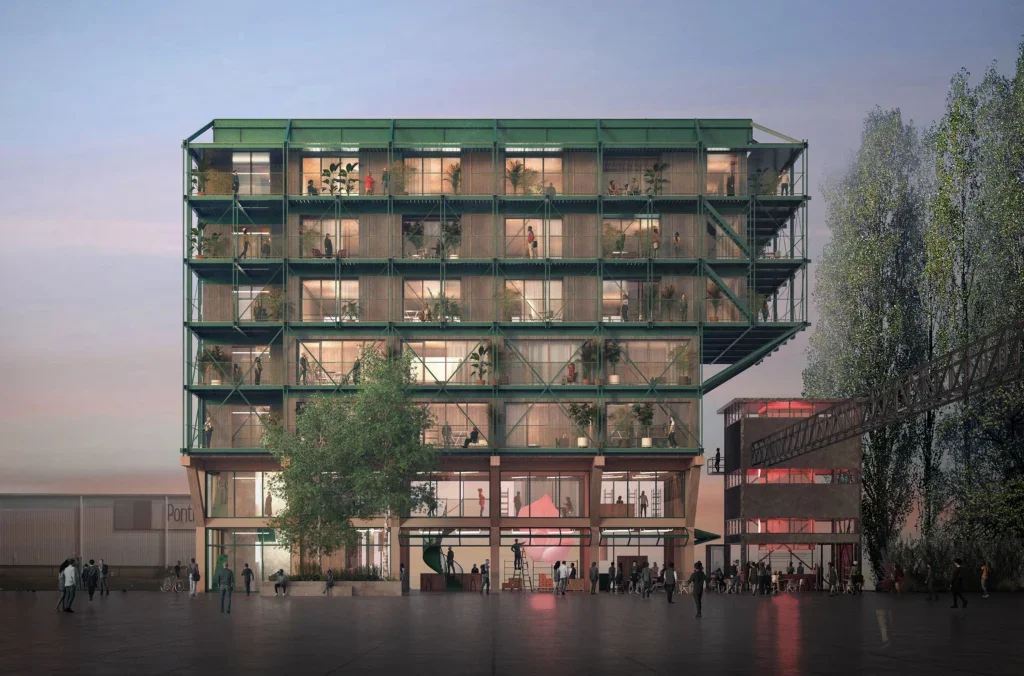
The steel shell references the industrial heritage of the harbour—cranes, frames and structures—while its green colour and fine-grained composition give the building a contemporary and humane character. The façade is deliberately legible: different housing types and functions are reflected in varying steel profiles, diagonals and rhythms.
The building massing is carefully proportioned to ensure an all-sided architectural presence, responding to multiple sightlines across the harbour basin. Generous galleries, balconies and roof gardens blur the boundary between private and collective space, fostering social interaction and a strong sense of community.
Sustainability is embedded at every level of the project:
Biobased Construction
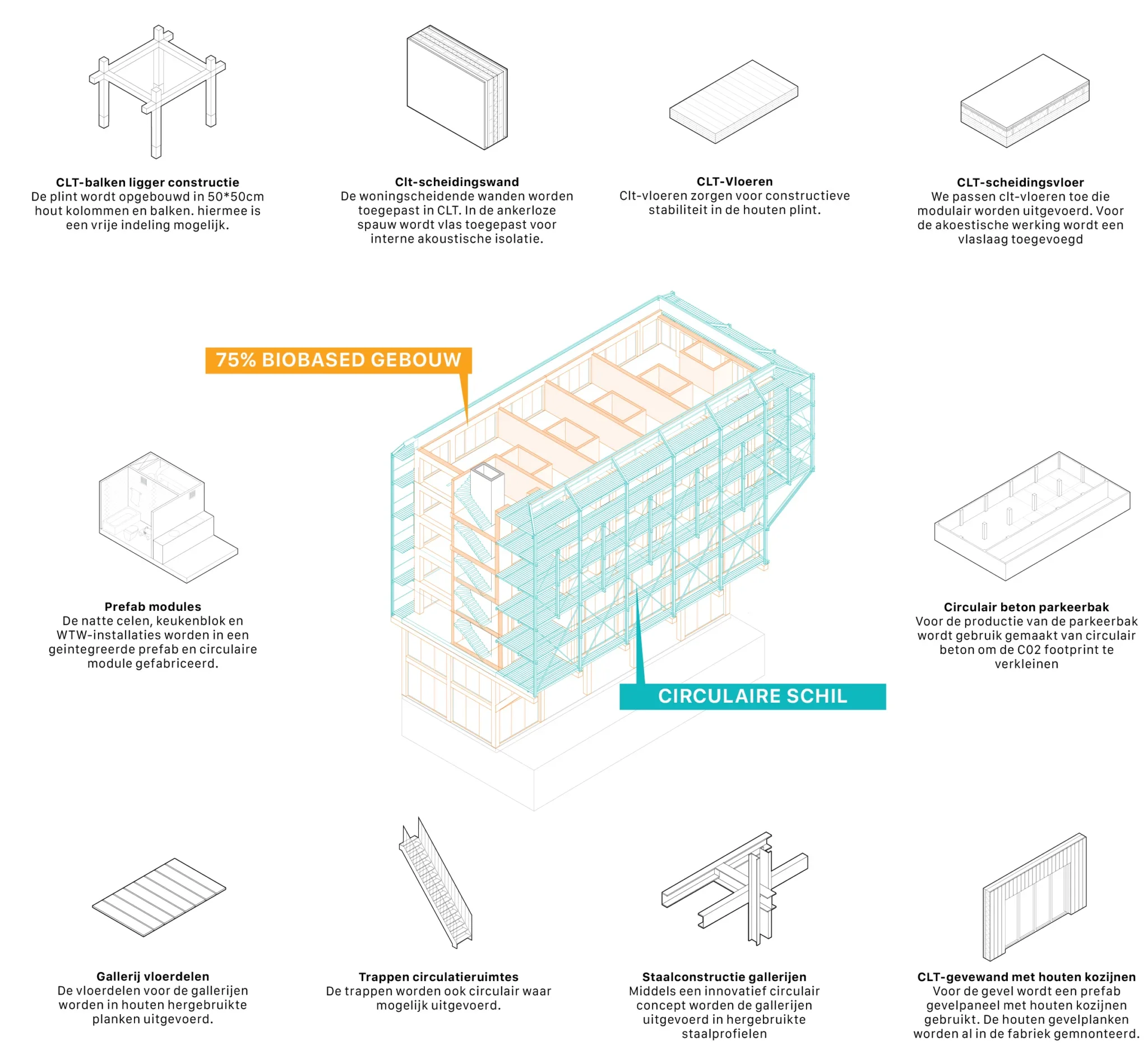
The residential core consists of a 75% biobased CLT structure, including biobased insulation and timber façades.
Prefabricated 2D timber elements ensure construction efficiency, quality control and reduced on-site emissions.
Circular Systems
The steel shell is composed of harvested and reused steel profiles, sourced through a demand-driven circular process in collaboration with Duspot.
All connections are dry and demountable, allowing future disassembly and reuse.
Prefabricated circular wet-core modules (bathrooms, kitchens, installations) include take-back guarantees.
Energy & Climate
High-performance insulation and triple glazing result in strong BENG performance.
The steel shell functions as integrated solar shading, reducing cooling demand.
The building is prepared for district heating, with flexibility for air–water heat pumps if required.
Roof zones combine PV panels, ecological roof gardens and water buffering, contributing to biodiversity and climate resilience.
The project achieves an excellent MPG score (≈0.45), well below regulatory thresholds.